Rum River Camera Club is becoming a little more official with every meeting.
We are still a small group, but now we have something we have been working toward since the club began: a real place to meet.
Our new home is the Isanti Community Center. The building costs only $25 a month, which makes it a wonderfully affordable option while our club is still growing. It is comfortable, easy to use, and, most importantly during a Minnesota summer, it has very good air conditioning.
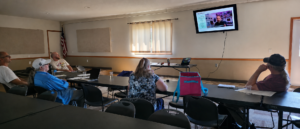
The television is not enormous, but neither is our group. For now, it works well for sharing photographs, presentations, and videos. My inexpensive projector and portable screen was bought as a temporary workaround, but I have to admit that I was disappointed in both of them. They have now been politely retired from camera-club duty. Maybe someday we’ll have a club garage sale and can sell them.
Until we have more members and more money available for equipment, we will continue doing what small organizations do best: making smart use of what we have.
Beginning With a Toast
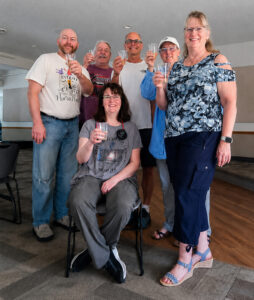
At the beginning of our first meeting in the new location, Dave surprised us by bringing out non-alcoholic champagne. We poured it into little glasses and toasted our new home, our club, and all the possibilities still ahead of us.
Naturally, we also took a group picture.
It felt like more than just another monthly meeting. It was the beginning of a new chapter and the first day of what we hope will be many great club opportunities.
Bright Sun, Better Photos
After the normal meeting agenda, I presented Bright Sun, Better Photos: Working With Summer Light.

Photographers are often taught that the middle of a bright summer day is the worst possible time to take pictures. The light can be harsh, highlights can disappear, shadows can become heavy, and people tend to squint directly into the camera while looking deeply unhappy about the entire arrangement.
But midday sun is not necessarily bad light. It is demanding light.
The main idea of the presentation was that photographers have three basic choices when working in harsh sunshine:
- Soften it by moving into open shade, creating shade, turning the subject, or waiting for a cloud.
- Shape it by using strong shadows, silhouettes, patterns, backlighting, bold geometry, or black-and-white.
- Control it through exposure, camera settings, RAW files, polarizing filters, or neutral-density filters.
The goal is not to frantically change every camera setting. First, pause and ask:
What is the sun doing to my subject?
Where is the light coming from? What is the brightest important detail? Are the shadows helping the photograph or hurting it? Is the subject squinting? Is glare bouncing from water, glass, leaves, skin, or pavement?
Once we identify the actual problem, it becomes much easier to choose a solution.
Learning From the Experts
The presentation included videos and advice from several experienced photography educators.

Simon d’Entremont demonstrated ways to use shade, backlighting, polarizers, and carefully protected highlights. The School of Photography covered tools and techniques such as Sunny 16, reflectors, neutral-density filters, black-and-white photography, and intentional shadow design. Nigel Danson focused on finding smaller landscape scenes, textures, colors, reflections, and strong shapes when the wide landscape becomes too busy in midday light. An Adorama summer photography guide also contributed advice about heat, humidity, hydration, sunscreen, and protecting camera equipment.
One of my favorite lessons was Nigel Danson’s suggestion to go smaller.
When the sky is blazing, the shadows are fighting, and the entire landscape seems to be shouting at once, do not try to photograph everything. Use a longer lens or tighter framing to find one doorway, reflection, rock texture, patch of color, repeating pattern, or interesting shadow.
Sometimes the best landscape photograph is not the whole landscape. It is the quiet little picture hiding inside it.
(Members can access the presentation, notes, worksheet and a video of my practice run in the RRCC google drive)
A Handout for the Field
Everyone received a handout that organized the presentation into practical tips they could keep and use later. It included the three-move strategy, quick camera-setting reminders, common bright-sun problems and their fixes, advice for different kinds of subjects, links to the expert videos, and several small practice assignments.
Those practice ideas included:
- Placing a person fully in open shade for a softer portrait.
- Putting the sun behind a subject to create a backlit glow.
- Composing around the edges and patterns of a strong shadow.
- Cropping out the bright sky and creating a “tiny landscape” from texture, color, or reflected light.
The handout was designed to turn the presentation into something people could actually take outside with them. The objective is not to memorize every possible setting. It is to build a simple habit:
Pause. Read the light. Make one smart choice. Then take the picture.
Bright-Sun Photo Shoot Checklist
Before heading out for a sunny summer photography session, check a few basics:
- Bring water, sunscreen, and a plan for regular shade breaks.
- Keep the camera bag out of direct sun and never leave equipment baking in a hot vehicle.
- Allow cold camera gear to adjust gradually when moving from air conditioning into humid outdoor air.
- Pack a lens hood, polarizer, charged batteries, and empty memory cards.
- Consider bringing a diffuser, reflector, or ND filter when the subject may need one.
- Check the sun’s direction and look for nearby shade before positioning people.
- Watch for squinting, dark shadows beneath the eyes, glare, and blown highlights.
- Expose for the brightest important detail.
- Ask whether the scene might be stronger in black-and-white.
- When the entire scene feels too busy, isolate something smaller.
Heat affects the photographer as well as batteries, sensors, lenses, and other equipment. Planning shade-and-water breaks and giving gear time to acclimate can prevent an enjoyable outing from turning into a humid little camera catastrophe.
Looking Ahead
Our first meeting at the Isanti Community Center was comfortable, educational, celebratory, and genuinely enjoyable.
We may still be a small club. Our television may still be small. Our budget is certainly still small.
But our ideas, enthusiasm, and opportunities are not.
We now have a home, a growing collection of programs and activities, and a group of photographers who enjoy learning from one another. That feels like something worth raising a glass to.
Here is to the first meeting of a bright new chapter for Rum River Camera Club. 📷🥂